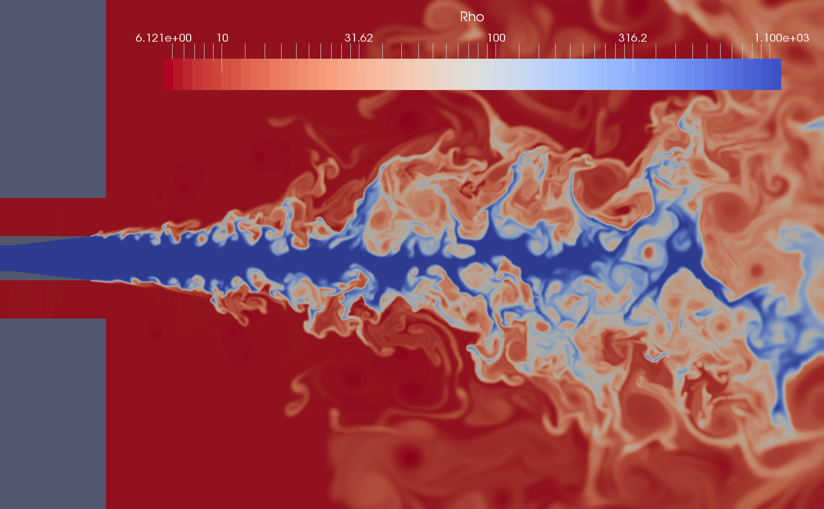
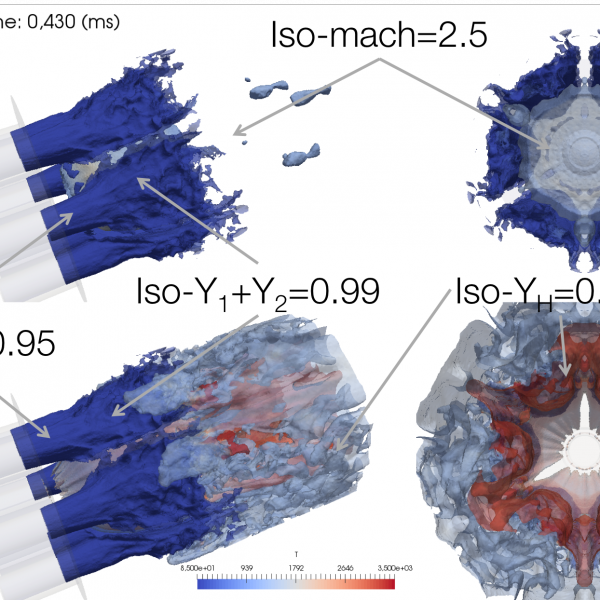
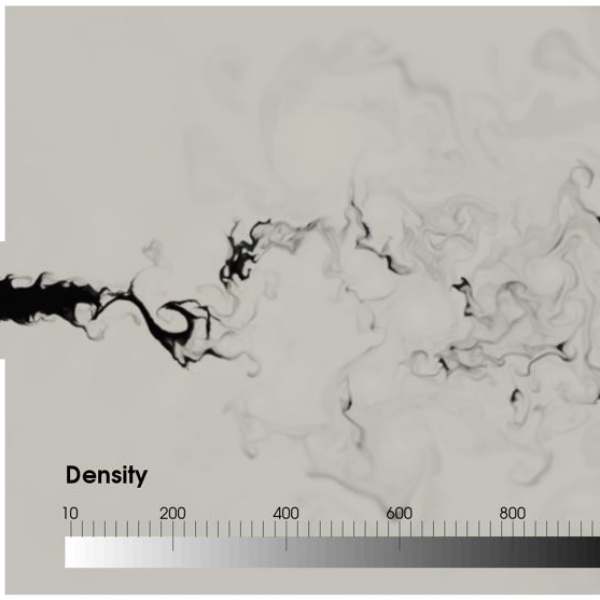
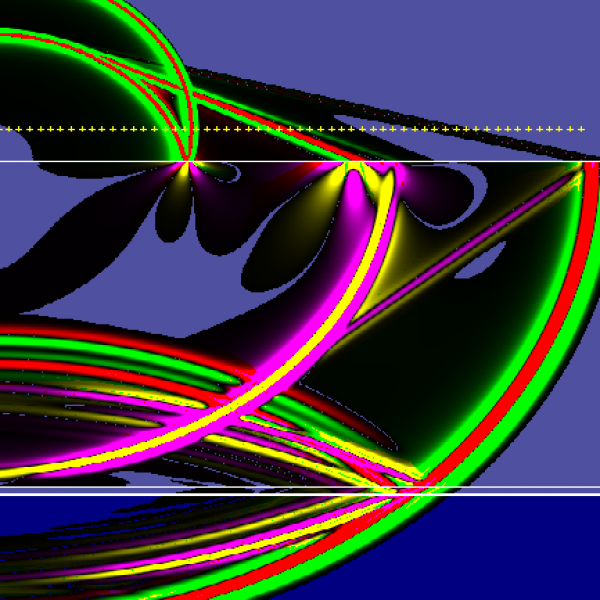
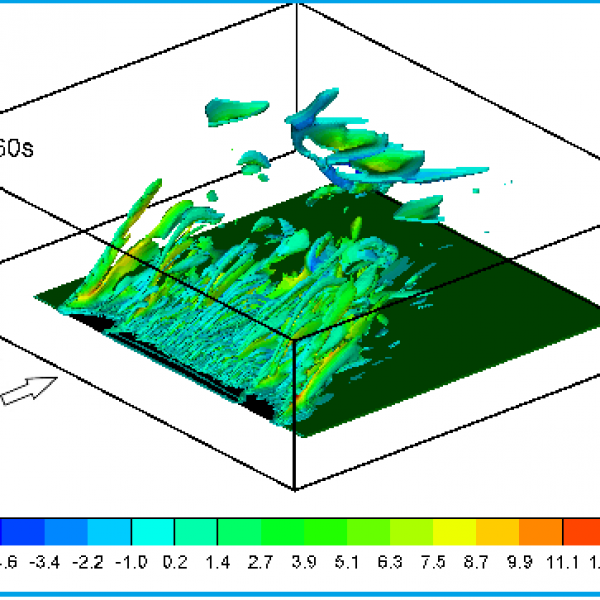
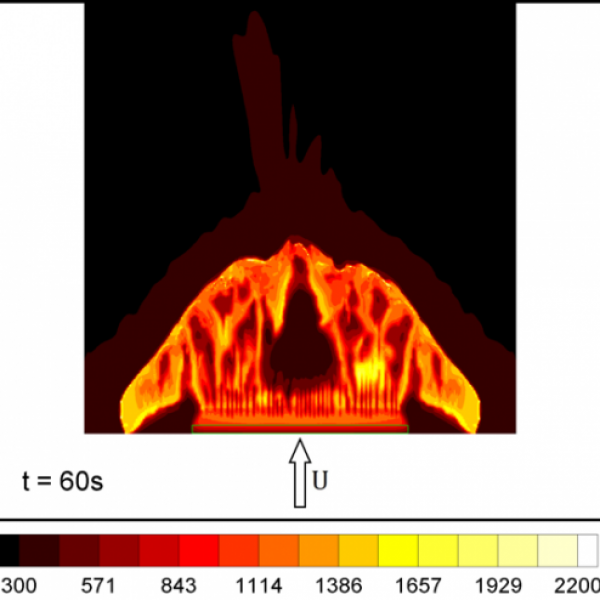
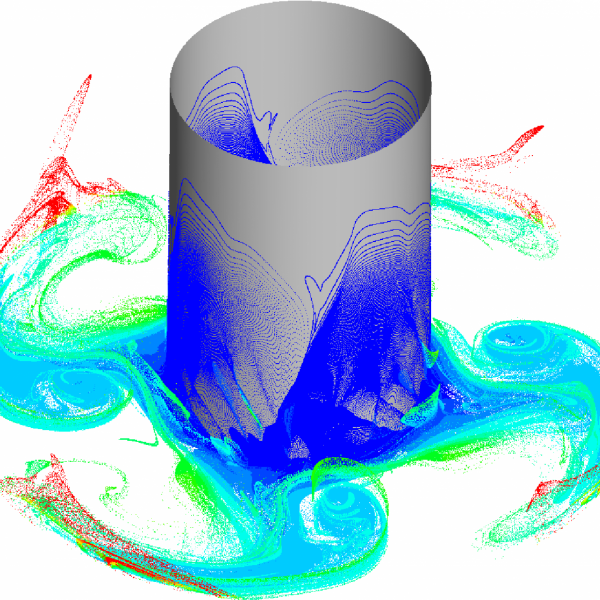
L’équipe TONIC (Thermodynamique, Ondes, Numérique, Interfaces et Combustion) développe une activité de modélisation de phénomènes fortement multi-échelles. Elle couvre notamment les écoulements multiphasiques et/ou réactifs, depuis l’échelle de l’injecteur isolé (quelques mm) à l’échelle du feu de forêt pleinement développé (plusieurs hectares).
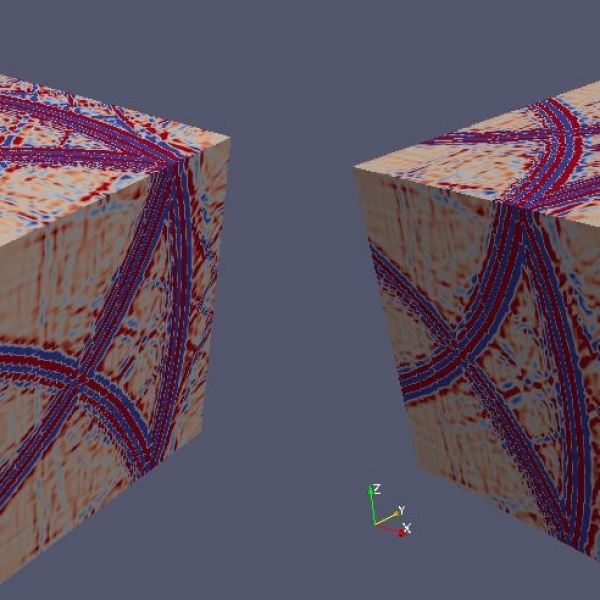
Des méthodes numériques adaptées sont développées en parallèle, notamment pour l’imagerie des sols (détection de nappes par analyse acoustique), ou encore pour la modélisation des transferts radiatifs.
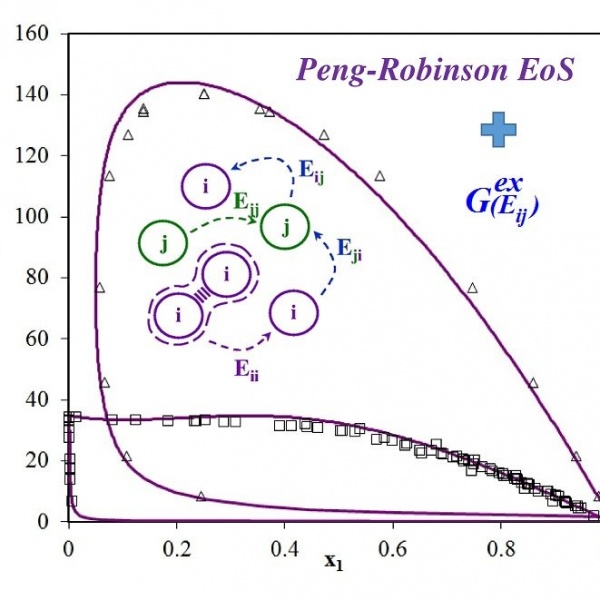
En parallèle à ces développements à caractère très multi-échelle, des travaux analytiques sont menés en appui à la construction de modèles. Un important effort de recherche est accordé à la modélisation de la thermodynamique des mélanges multiphasiques (calculs d’équilibre thermochimique, fermetures thermodynamiques complexes), ou encore au développement de modèles cinétiques réduits pour la combustion.
Jinhua Lu, Thomas Gregorczyk, Song Zhao, Pierre Boivin. Phase-field-based recursive regularized multiphase lattice Boltzmann model with a consistent pressure scheme. International Journal of Multiphase Flow, 2026, 195, pp.105500. ⟨10.1016/j.ijmultiphaseflow.2025.105500⟩. ⟨hal-05344425⟩ Plus de détails...
Multiphase lattice Boltzmann models with enhanced stability and no deviation terms.
• Consistent pressure scheme decoupled from density and viscosity variations.
• The proposed model shows superior numerical stablity and accuracy.
Jinhua Lu, Thomas Gregorczyk, Song Zhao, Pierre Boivin. Phase-field-based recursive regularized multiphase lattice Boltzmann model with a consistent pressure scheme. International Journal of Multiphase Flow, 2026, 195, pp.105500. ⟨10.1016/j.ijmultiphaseflow.2025.105500⟩. ⟨hal-05344425⟩
Benoît Péden, Pierre Boivin, Nicolas Odier. Large-Eddy Simulation of a 3D airblast injector using a diffuse interface four-equation model: effects of evaporation and combustion. Combustion and Flame, 2026, 285, pp.114771. ⟨10.1016/j.combustflame.2026.114771⟩. ⟨hal-05557933⟩ Plus de détails...
This work presents Large-Eddy Simulations of a three-dimensional airblast-type injector using a diffuse-interface Multi-Fluid approach. A four-equation model is employed, including a consistent phase transition solver and a thermodynamic closure suitable for evaporating and reacting flows. The influence of evaporation and combustion on the spray and flow dynamics is investigated through a comparative analysis of cold, evaporative, and reactive configurations. The method is first validated against reference results and known behavior for similar injector geometries. It is shown that the addition of evaporation significantly alters the liquid fuel distribution, particularly in the inner recirculation zone, while combustion further modifies both liquid and gaseous fuel fields due to temperatureinduced evaporation and fuel consumption. The reacting case exhibits typical flame features, including hollow cone structures and localized high-temperature zones near stoichiometric mixture fractions. These phenomena align well with expected flame behavior under airblast conditions. Phase transition and combustion also have a notable impact on the velocity field, with increased expansion and stronger recirculation induced by heat release. The proposed model captures these effects in a unified framework. Finally, the present multi-physics approach enables consistent and efficient simulation of multiphase, reactive sprays, providing physical insight into the coupled interaction between atomization, evaporation, and combustion. The method shows good numerical performance on the 3D injector, with a reduced computational time of 2.1 × 10 -5 s.mpi/node/it, which has no overcost compared to the Lagrangian reference model. The fully explicit treatment of the equation of state (NASG) ensures excellent robustness on complex geometries, while avoiding the iterative procedure required by cubic-type EoS. These numerical properties make the DIM suitable for industrial LES configurations involving evaporation and combustion, and further model development.
Benoît Péden, Pierre Boivin, Nicolas Odier. Large-Eddy Simulation of a 3D airblast injector using a diffuse interface four-equation model: effects of evaporation and combustion. Combustion and Flame, 2026, 285, pp.114771. ⟨10.1016/j.combustflame.2026.114771⟩. ⟨hal-05557933⟩
A. Fayet, Stéphane Mimouni, Luc Favre, Catherine Colin, Pierre Boivin, et al.. Modeling and numerical simulation of boiling flows: application and dataset release of the DEBORA experiment. International Journal of Heat and Mass Transfer, In press. ⟨hal-05571906⟩ Plus de détails...
Computational Fluid Dynamics (CFD) is widely used in nuclear engineering for safety related studies or for new design investigations. Co-developed by EDF, CEA, ASNR and Framatome, the NEPTUNE_CFD code is specialized in nuclear thermal-hydraulic applications allowing the simulation of two-phase flows on complex geometries. Recently, a new Heat Flux Partitioning (HFP) model has been proposed by Favre et al. [1] for a thorough description of the boiling phenomena, including, among others, the effect of wall sliding bubbles. However, an excessive increase in computation time follows the subsequent modeling improvement. This paper presents an optimization of the bubble sliding calculation returning to a reasonable computation time compatible with industrial applications. The newly developed model is then validated using NEPTUNE_CFD and compared to the DEBORA experimental data, featuring R12 coolant boiling flow within a characteristic non-dimensional scope of a Pressurized Water Reactor (PWR). The improvement in the wall temperature calculation is demonstrated by several simulations implementing the new HFP model. To support the community's validation and benchmarking efforts, the complete DEBORA experimental dataset is made publicly available for the first time as part of this work, provided under a CC BY 4.0 license. This contribution advances both modeling capabilities and data availability, promoting transparency and reproducibility in multiphase CFD for nuclear applications
A. Fayet, Stéphane Mimouni, Luc Favre, Catherine Colin, Pierre Boivin, et al.. Modeling and numerical simulation of boiling flows: application and dataset release of the DEBORA experiment. International Journal of Heat and Mass Transfer, In press. ⟨hal-05571906⟩
Journal: International Journal of Heat and Mass Transfer
Marc Le Boursicaud, Jean-Louis Consalvi, Pierre Boivin. Prediction of hydrogen–ammonia blends autoignition. Combustion and Flame, 2026, 285, pp.114713. ⟨10.1016/j.combustflame.2025.114713⟩. ⟨hal-05469163⟩ Plus de détails...
The growing interest in hydrogen as an alternative energy vector has raised new technological challenges, in particular regarding its storage. This has motivated increasing attention to ammonia as a hydrogen carrier. In parallel, the use of hydrogen-ammonia blends as combustible fuels has attracted significant interest, as such mixtures can be easier to handle in some applications than pure hydrogen, while still enabling carbon-free combustion.In this context, the present study focuses on modeling the ignition of arbitrary gaseous hydrogen-ammonia-air blends. First, the minimal chemical description required to accurately capture the ignition delay of these mixtures is identified, revealing three main ignition regimes. Ignition delay formulas are then derived for these regimes by extending methods previously developed for pure hydrogen and syngas. The resulting ignition time expressions are subsequently combined into a unified formulation, valid across a wide range of pressures, temperatures, and fuel compositions. Finally, modifications to a recently published passive scalar model for CFD tools are introduced so as to accurately predict ignition events in hydrogen-ammonia-air mixtures while reducing computational cost. Novelty and
Marc Le Boursicaud, Jean-Louis Consalvi, Pierre Boivin. Prediction of hydrogen–ammonia blends autoignition. Combustion and Flame, 2026, 285, pp.114713. ⟨10.1016/j.combustflame.2025.114713⟩. ⟨hal-05469163⟩
Ziyin Chen, Song Zhao, Bruno Denet, Christophe Almarcha, Pierre Boivin. A three-dimensional study on premixed flame propagation in narrow channels considering hydrodynamic and thermodiffusive instabilities. Combustion and Flame, 2025, 281, pp.114392. ⟨10.1016/j.combustflame.2025.114392⟩. ⟨hal-05344216⟩ Plus de détails...
In numerical studies of quasi-2D problems, such as laminar flame propagation through a slit, the quasi-2D assumption is commonly applied to simplify the problem. However, the impact of the third dimension (in the thickness between walls) can be significant due to strong curvature. The intrinsic Darrieus-Landau instability, the Saffman-Taylor instability, and the thermodiffusive instability lead to curved flame fronts in both the transverse and normal directions and radically change the global flame speed. This study investigates the interaction of these instabilities and their impact on premixed flames freely propagating in narrow channels. Two lean fuel-air mixtures are considered: one with unity Lewis number Le = 1 and another with Le = 0.5. A single-step Arrhenius-type reaction is used for combustion modeling. Joulin Sivashinsky's model [1], termed the 2D+ model, is implemented to capture the confinement effect due to walls. By comparing 3D Direct Numerical Simulations (DNS) and 2D simulations at unity Le, we find that the 2D+ model accurately reproduces confinement effects for channel width h up to 3.6δ T (δ T : thermal flame thickness), extending the validity of Darcy's law.
However, for larger h, interactions between flame curvatures in two directions result in higher flame surface increment and consumption speed. Besides, for 3D cases with Le = 0.5, positive curvature regions on the flame front primarily contribute to the global reaction due to the Lewis effect. Statistical studies on flame dynamics between walls in 3D cases are also
Ziyin Chen, Song Zhao, Bruno Denet, Christophe Almarcha, Pierre Boivin. A three-dimensional study on premixed flame propagation in narrow channels considering hydrodynamic and thermodiffusive instabilities. Combustion and Flame, 2025, 281, pp.114392. ⟨10.1016/j.combustflame.2025.114392⟩. ⟨hal-05344216⟩
6 février 2026
- Étude du transport turbulent des particules énergétiques dans les plasmas de fusion nucléaire par des simulations de trajectoires et des techniques d’intelligence artificielle / Soutenance de thèse Benoît Clavier
Doctorant : Benoît CLAVIER
Date et lieu : le vendredi 6 février à 14h00, M2P2 - salle Labus, Centrale Méditerranée
Résumé : Cette thèse étudie le transport turbulent de particules chargées dans les plasmas de fusion magnétisés en combinant modèles réduits de turbulence, simulations numériques de trajectoires et approches data-driven fondées sur l’intelligence artificielle. Après une présentation du cadre physique du transport radial dans un tokamak et du modèle de Hasegawa–Wakatani, des diagnostics eulériens et lagrangiens sont développés afin d’obtenir des mesures de transport de référence. Le travail analyse ensuite le transport de particules tests dans différents régimes turbulents, en mettant en évidence les limites de certaines approximations classiques et la complexité de la dynamique des particules énergétiques. L’étude est étendue à une turbulence tridimensionnelle plus réaliste de type ion-temperature-gradient (ITG), permettant d’établir des lois d’échelle pour la diffusion radiale. Enfin, un modèle de génération de turbulence synthétique fondé sur un Convolutional Variational Autoencoder (CVAE) couplé à un modèle dynamique est proposé pour reproduire efficacement la turbulence et accélérer les études de transport, illustrant le potentiel des approches data-driven pour les recherches futures en physique des plasmas.
Jury
David ZARZOSO-FERNANDEZ - Chargé de recherche - CNRS M2P2 - Directeur de thèse
Emmanuel FRéNOD - Professeur des universités - Université Bretagne Sud - Co-directeur de thèse
Victor TRIBALDOS - Professeur des universités - Universidad Carlos III de Madrid - Rapporteur
Julien LE SOMMER - Directeur de recherche - CNRS, IGE Grenoble - Examinateur
Maxime LESUR - Professeur des universités - Université de Lorraine - Institut Jean Lamour - Rapporteur
Mitra FOULADIRAD - Professeure des universités - Centrale Méditerranée - Président
22 janvier 2026
- Étude des Instabilités de Combustion au moyen des Méthodes Lattice-Boltzmann / Soutenance de thèse Ziyin Chen
Doctorante : Ziyin CHEN
Date et lieu : le jeudi 22 janvier 2026 à 13h45 ; amphi No.1 de Centrale Méditerranée
Résumé: Sous l’effet du réchauffement climatique, l’hydrogène s’impose comme une alternative prometteuse aux combustibles fossiles. Toutefois, les flammes hydrogène-air présentent de fortes instabilités, particulièrement en milieux confinés où les parois et les pertes de chaleur jouent un rôle déterminant. Cette thèse analyse la stabilité des flammes prémélangées hydrogène-air dans un brûleur de Hele-Shaw à l’aide de la méthode de Lattice-Boltzmann.
Les mécanismes d’instabilité hydrodynamique et thermodiffusive sont étudiés en 2D et 3D, avec et sans pertes thermiques aux parois. Les simulations mettent en évidence les conditions de rupture de symétrie, l’influence du nombre de Lewis, de la largeur du canal et des pertes de chaleur sur la morphologie et la vitesse de flamme. Des modèles réduits sont proposés pour prédire la forme des fronts, la formation de cuspides et l’évolution de la vitesse de flamme.
Ces résultats contribuent à une meilleure compréhension des flammes hydrogène confinées et fournissent des outils de modélisation utiles à la conception de micro-dispositifs sûrs.
Mots clés : Instabilités de combustion, Flamme laminaire, Écoulement confiné, Brûleur Hele-Shaw